
Success Study of a Household Goods Manufacturer
Company Profile
- Established household goods manufacturer
- 2,500 employees
- Annual revenue of approx. €450 million
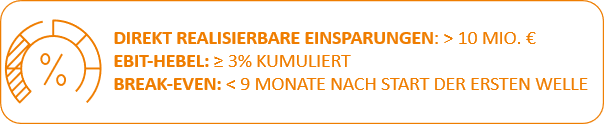
Result: Through a targeted transformation in procurement, the client was able to develop purchasing from a pure cost factor into a strategic value generator: €10 million savings, ≥ 3% cumulative EBIT leverage, < 9 months break-even.
The starting point for the transformation roadmap was a four-week maturity analysis of the six pillars of strategic procurement.
Strategy
Findings
- No documented procurement strategy, category or supplier strategies
- Focus on short-term price optimization instead of value creation
- Global sourcing processes are non-transparent and driven by misaligned incentives
- Lack of systematic market orientation and risk assessment
- No regular exchange with product management, quality management, or sales
Risks
- Increased compliance and supply risks, resource drain through complexity, prevention of sustainable value creation
Recommendations
- Develop a holistic procurement strategy with clear objectives
- Introduce a procurement manual & systematic risk assessment
- Optimize sourcing model including compliance guidelines
- Quarterly workshops with internal stakeholders
Expected Benefits
10–15% savings through strategic bundling, transparent governance, better risk management, and innovation enablement; +1.5% EBIT leverage within 18 months
Processes
Findings
- Strong manual component, mainly Excel-based
- Long alignment cycles, inefficient product development
- Hardly any supplier management, no standardized workflows
- Returns and inventory processes unclear
Risks
- High time and resource requirements, error-proneness, lack of transparency, no risk control, shadow documentation, unclear inventories, and increased return rates
Recommendations
- Standardize & digitize procurement processes
- Implement systematic supplier management (incl. tenders & benchmarking)
- Clear process documentation and responsibilities
- Automate demand planning & returns processes
Expected Benefits
More efficient workflows with lower error rates and time savings (-40% time); Improved supplier performance and transparency; ROI through process cost reduction within 9 months
Organization
Findings
- Unclear roles & responsibilities; procurement operationally overloaded
- Inefficient interfaces with QM, sales, graphics
- High staff turnover, missing middle management layer
- Dependency on individuals
Risks
- Interface conflicts, duplicate work, slow decisions, knowledge loss, dependency on individuals, and lack of international governance
Recommendations
- Establish structured knowledge management
- Introduce a middle management layer
- Stronger integration of procurement into core processes
- Promote international collaboration
Expected Benefits
20% shorter time-to-market; Fewer conflicts and faster decision-making (+20% speed); more stable organization with better synergy utilization (-15% process costs); scalability and resilience.
Employees
Findings
- Knowledge concentrated on few individuals
- No clear target agreements, career paths, or development plans
- Insufficient technical and strategic know-how
- Generational change within the organization
- Innovation management not established
Risks
- Knowledge loss due to turnover, low motivation and retention, overload in complex decisions, lack of innovation impulses
Recommendations
- Define clear roles and objectives
- Introduce target agreements & development paths
- Qualification and training programs for strategic tasks
- Establish idea and innovation management
Expected Benefits
Safeguarding and broadening know-how (+30% motivation, -30% onboarding time); Higher employee retention and innovation capability (+20% value contribution); risk minimization during staff turnover.
Systems & Tools
Findings
- Outdated tools, high manual effort
- SAP only partially used, Excel & email dominate
- No central supplier database
- No basis for automation & AI
Risks
- High time effort and error-proneness, lack of transparency, no foundation for automation/AI, insufficient data for decisions
Recommendations
- Implement modern, integrated procurement systems
- Build a central supplier database
- Digitize & automate routine tasks
- Deploy AI-based tools (forecasting, benchmarking)
Expected Benefits
Time savings and lower error rates (+50% process speed, -30% process costs); improved data quality and capacity for strategic work; payback in <12 months.
Performance Management / KPIs
Findings
- No clear procurement KPIs; success measured only by sales/revenue
- No reporting on supplier performance or portfolio profitability
- Measures not tracked; reporting ad-hoc
Risks
- No control mechanisms or transparency, no success monitoring or continuous improvement
Recommendations
- Introduce clear procurement KPIs (e.g. savings, delivery reliability, TCO)
- Establish regular reporting & review processes
- Focus on value contribution instead of volume
- Build a transparent performance culture with KPI dashboard
Expected Benefits
Measurable results and continuous improvement; Greater transparency and stronger positioning of procurement as value driver; real-time management for data-driven decisions and EBIT improvement.
Implementation of the Transformation Roadmap
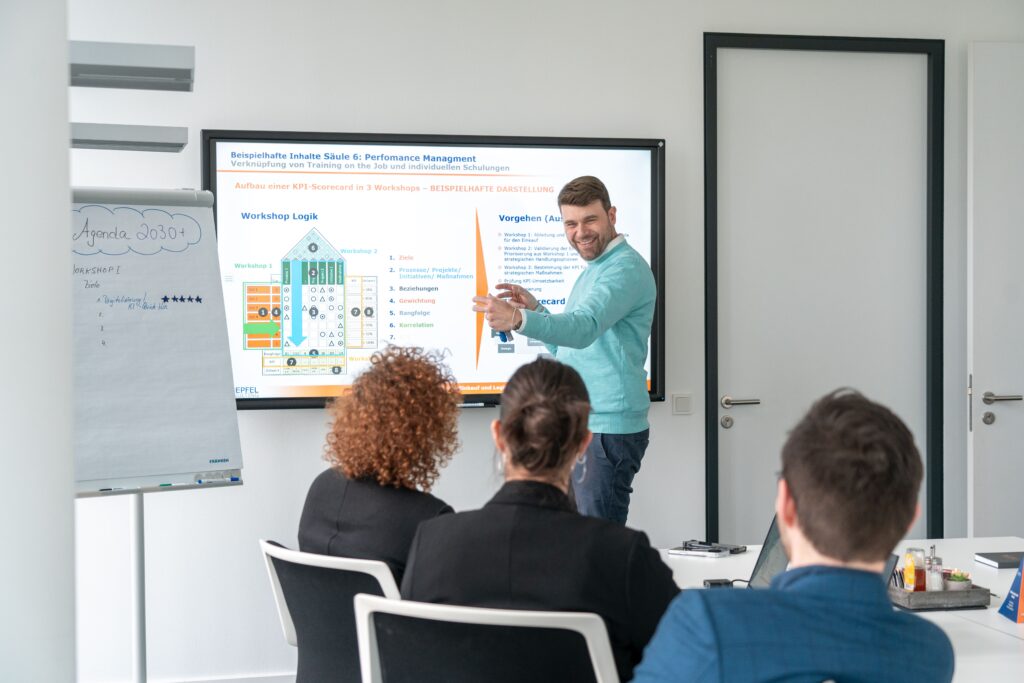
The transformation program was executed in three waves:
Wave 1 – Building the Foundation & Quick Wins
- Develop spend overview for transparency
- Create overarching procurement strategy incl. pilot projects (e.g. category management)
- Introduce first KPIs and dashboard structures
- Implement quick savings via tenders and negotiations
→ Goal: Activate first EBIT levers, break-even < 9 months
Wave 2 – Strategic Alignment & Organization
- Align procurement consistently with corporate goals
- Develop category strategies and define category leads
- Build a scalable and resilient organization with clear roles
- Realize largest savings potentials in categories
→ Goal: Position procurement as strategic value driver
Wave 3 – Enablement & Performance Phase
- Sustainable anchoring of competencies (skill-gap analysis, development paths, academy)
- Strengthen innovation (e.g. supplier co-creation, innovation challenge days)
- Establish performance culture with live dashboards & regular KPI reviews
→ Goal: Continuous improvement, higher transparency, and EBIT increase
Author:
Contact:
Kloepfel Group
Damir Berberovic
Tel.: +49 211 941 984 33 | Email: rendite@kloepfel-consulting.com